

Auto China 2026 Concludes with Record-Breaking Scale and Global Impact
The 2026 Beijing International Automotive Exhibition drew to a successful close on May 3 after tendays of exhibition under the theme "Future of Intelligence.". As the world's largest and most influential international A-class auto show, Auto China 2026 captured the sweeping transformations reshaping the global automotive industry. Serving as a core hub that showcases the strength of China's automotive industry, leads the global industrial transformation trend, and facilitates domestic and foreign industrial exchanges and cooperation, the event presented the vibrancy of China's automotive industry in the new era and the latest trends of the global automotive industry. Its unprecedented scale and high level of internationalization stood as the show's most defining features.

I. Record-Breaking Scale: A Global Convergence of the Automotive Ecosystem
For the first time, Auto China 2026 adopted a dual-venue, full-domain layout, utilizing 17 exhibition halls across the China International Exhibition Center (Shunyi) and the Capital International Exhibition Center of China. With a total area of 380,000 square meters, the exhibition set a new record not only for Auto China but also for auto shows worldwide.

This expanded scale facilitated an unprecedented gathering of industry resources, bringing together leading domestic and international OEMs, as well as top-tier supply chain and cutting-edge technology companies from 21 countries and regions. The event presented a comprehensive industry chain spanning vehicle R&D, core components, intelligent technologies, and ecosystem services—fostering deep integration and a competitive yet collaborative global landscape.
This year's exhibition featured 1,451 vehicles, including 181 premieres and 71 concept cars—numbers that rank among the highest in the global auto shows. These figures reflect a picture of a diverse, innovation-led global automotive industry, positioning Auto China as a premier window for the world to observe China's automotive development and to deepen international economic, trade, and technological exchanges.
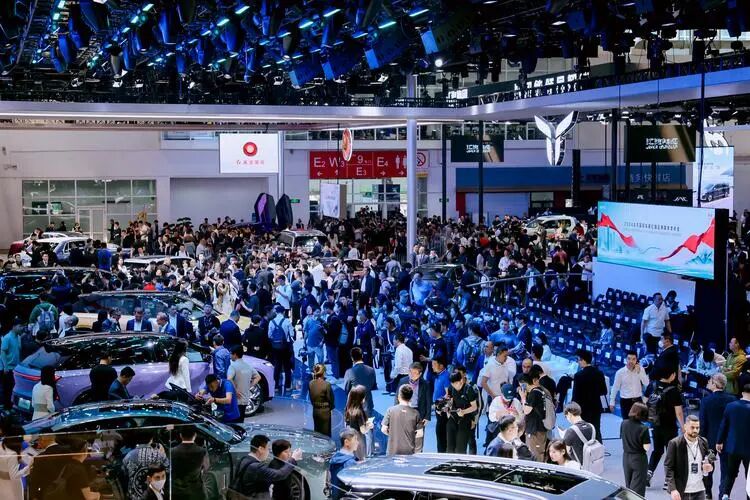
The on-site atmosphere was highly dynamic, with industry enthusiasm reaching new heights. The exhibition attracted 1.28 million visits over its ten-day run, including 65,000 overseas visitors—a clear sign of the show's surging international profile.

A total of 32,000 media representatives, including 4,125 from overseas, covered the event. During the show, 219 press conferences were held. Leading global news organizations and specialized media teams delivered multi-dimensional coverage, conveying the dynamism and global influence of China's automotive industry to the world.
More than 50 concurrent industry summits, seminars, exchange events, and precision procurement matching sessions were held, creating an integrated ecosystem of exhibitions, conferences, networking, and deal-making. Diplomatic personnel from over 70 countries visited the exhibition, conducting research and organizing events that deepened international exchanges and economic-trade ties, further solidifying Auto China's position as a premier global hub for automotive cooperation.
II. Technology Leading the Transformation: Intelligence and Electrification Redefine the Automobile
The global automotive industry is undergoing a historic transformation from the widespread adoption of electrification to the ascent of intelligence. Intelligent connected new energy vehicles (NEVs) have become a key driver of China's new quality productive forces and a central arena for global industrial competition. Auto China 2026 closely followed the pulse of industrial transformation, concentrating on presenting the latest achievements and trends of the integration of electrification, intelligence, and connectivity. Frontier technologies such as AI large models being installed in vehicles and L3 autonomous driving commercialization made their debut. This marks that the automotive industry has officially entered a new era of intelligent travel, initiating a fundamental transformation from "transportation means" to "intelligent mobile terminals" and "mobile living spaces".
In the field of electrification, technological advancements have achieved a breakthrough, and the problems of range and charging have been completely resolved. Next-generation battery energy densities have exceeded 400Wh/kg, enabling ranges of over 1,500 kilometers. Technologies such as nine-minute flash charging and extreme cold fast charging at -30°C are making refueling experiences comparable to gasoline vehicles. Multiple technology pathways, including electric and extended-range, are advancing in parallel. Several mass-produced hydrogen fuel cell vehicles made appearances, showcasing improvements in fuel cell performance and reduced refueling times, providing crucial support for carbon peaking and carbon neutrality goals.

On the intelligence track, Chinese brands are leading the charge. Centralized computing platforms and multimodal large models are empowering vehicles, with intelligent cabins evolving into multimodal interactive intelligent spaces. Lidar has become standard equipment on mid-to-high-end models, and Level 3 autonomous driving has achieved large-scale commercial deployment on open roads in select cities. Furthermore, the deep integration of automotive, energy, and communications industries is accelerating the development of a "car + everything" ecosystem. Internet of Vehicles technology enables all-domain collaborative communication, driving the formation of a new, intelligent transportation ecosystem.
III. The Rise of Chinese Brands: Growing Global Influence
Chinese independent brands have demonstrated strong competitiveness and resilience in the intelligent connected vehicle. Leveraging the advantages of China's massive market, its complete automotive industrial system, and sustained investment in technological innovation, Chinese automakers are accelerating technological iteration, advancing product capabilities, and elevating their brand positioning. They are gradually breaking the dominance of foreign brands in the premium vehicle segment. Domestic luxury cars have gained widespread recognition for their excellent quality and intelligent features, and the sales volume and reputation of high-end models have both improved.
At this year's show, flagship models from Chinese brands took center stage, covering a range of segments including high-end electric sedans, mid-to-large SUVs, and luxury MPVs. Achieving self-sufficiency in core technologies, Chinese automakers have made comprehensive breakthroughs in key areas such as power batteries, electric motors, electronic controls, intelligent cabins, and autonomous driving. Their product portfolios now cover all market segments, meeting diverse consumer needs and continuing to gain market share, becoming a core engine of global automotive industry growth.

In recent years, China's automotive exports have surged, and its international influence has continued to expand. In 2025, China ranked as the world's largest automobile exporter, with products and technologies gaining recognition in global markets. Export destinations have expanded from traditional developing countries to developed regions including Europe and North America. During Auto China 2026, the presence of global media, international visitors, and overseas dealers—with their attention shifting from traditional foreign brands to Chinese technologies and products—demonstrates the high level of global recognition for China's automotive achievements. Chinese automotive brands are transitioning from being mere product exporters to comprehensive exporters of technology, standards, and ecosystems, enhancing their global voice and influence as a core force reshaping the global automotive landscape.
IV. Open Cooperation for Shared Success: Co-creating a New Blueprint for Global Industry Development
As a core platform for global automotive exchange and cooperation, Auto China 2026, with its highly international vision, embodies the principles of openness and cooperation, serving as a vivid example of China's commitment to high-level opening-up and the coordinated development of the global automotive industry. Industry elites from around the world gathered in Beijing to discuss development strategies, explore innovation pathways, and expand opportunities for cooperation, fully demonstrating China's commitment to openness, mutual benefit, and win-win development.

This year's exhibition highlighted its international character. Global automakers, parts suppliers, and technology companies deepened their engagement, strengthening cooperation in technology R&D, industrial chain coordination, market expansion, and talent development. This cooperation is propelling the global automotive industry from vertical specialization towards a new pattern of mutual cooperation and shared success.
China's automotive ecosystem continues to release its dividends. A complete supply chain, robust technological iteration, an ultra-large-scale consumer market, and an open business environment have created stable development opportunities, establishing China as a source of innovation and a core growth engine for the global automotive industry. International brands continue to increase their R&D and product deployment in China, deeply integrating into the local industrial ecosystem. Concurrently, Chinese automakers are accelerating their global expansion, establishing overseas factories and forming joint ventures to enter global markets, empowering the collaborative progress and mutual benefit of Chinese and foreign automotive industries.

V. Regional Synergy for New Development: Boosting the Automotive Economy
China is advancing a new round of large-scale equipment upgrades and the trade-in of old consumer goods. As a pillar of the national economy, the automotive industry plays a vital role in expanding investment, stimulating consumption, and stabilizing growth. The successful hosting of Auto China 2026 effectively energized the automotive market, tapped into consumption potential, and released domestic demand, contributing China's strength to global economic development. During the exhibition, major automakers offered various purchase incentives, combined with trade-in subsidies, further reducing the cost of vehicle purchases for consumers, driving sustained growth in the automotive consumer market, and highlighting the role of auto shows as a bridge in boosting consumption and stabilizing growth.
Auto China 2026 also served as a significant practice of the coordinated development strategy for the Beijing-Tianjin-Hebei region. Closely aligned with this national strategy, the exhibition built an efficient matching platform, accelerating the deep integration of the industrial chain across the three regions. Through the empowerment of the exhibition, industrial synergy among the three regions is accelerating from "chain coordination" to "ecosystem co-creation," continuously building new momentum for regional economic growth and providing strong support for China's modernization.

VI. Empowering a New Journey for the Industry: Auto China Continues Its Global Success
This year's Auto China has received high attention and strong support from the Central Committee of the Communist Party of China, the State Council, the National People's Congress, the Chinese People’s Political Consultative Conference, relevant national ministries and commissions, as well as the Beijing Municipal Committee of the Communist Party of China and the Beijing Municipal Government. The Beijing Municipal Committee of the Communist Party of China, the Beijing Municipal Government, the Shunyi District Committee of the Communist Party of China, the Shunyi District Government, as well as relevant functional units and departments at the municipal and district levels have provided strong support for the exhibition. Government officials visited the exhibition to conduct research and provide guidance, encouraging the industry to implement central government policies on high-quality development of China’s automotive industry. Key policy directions include boosting consumption, stabilizing exports, improving the ecosystem, and fostering new growth drivers. The industry is urged to stay committed to electrification, connectivity, intelligence, and green development — strengthening technological innovation, deepening high-level opening-up and international cooperation, and accelerating the building of a modern industrial system. These steps provide solid support for China’s goals of becoming a manufacturing powerhouse and a transportation powerhouse.
As a bellwether for global automotive development, Auto China carries the mission of leading industrial upgrades, promoting automotive culture, deepening international cooperation, and boosting automotive consumption. It will continue to demonstrate its value as a world-class platform, working with global partners to embark on a new journey of intelligent, green, and integrated development — contributing China‘s strength to global economic growth and innovation in the global automotive industry.
-
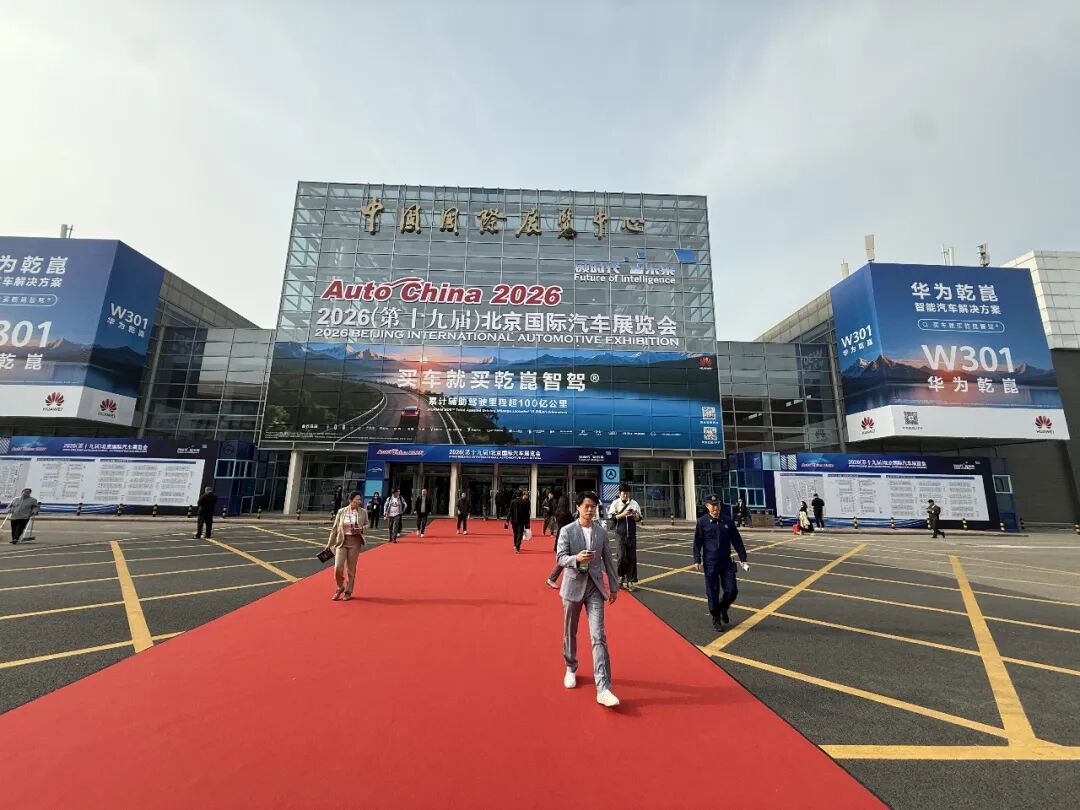
规模全球之最!2026北京车展开幕,三大脉络读懂——
넶217 2026-04-24 -
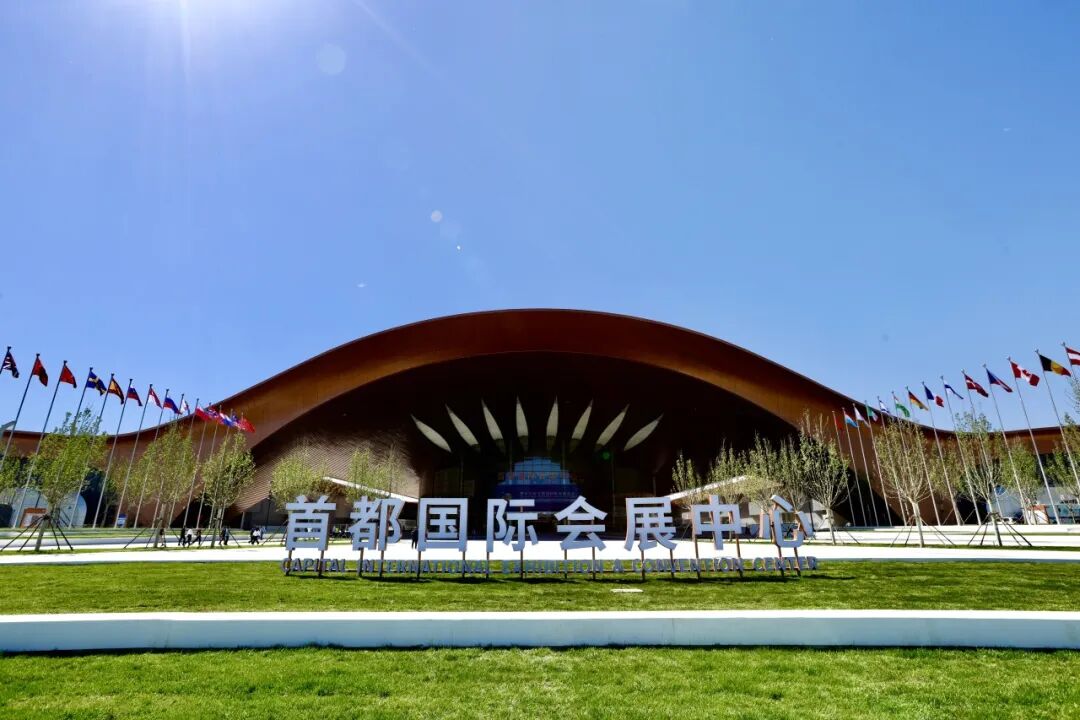
时间定了!全球规模最大车展要来了
2026北京车展将突破产业壁垒,助力汽车与能源领域的跨界合作持续深化,聚焦绿色低碳出行,推动充电设施、储能技术与整车产品的协同升级;更以“车”为核心枢纽,推动文化、能源、通信、家居、消费电子等多领域的资源联动与加速融合,以场景化体验为核心,推动车机与家居互联、移动终端无缝衔接,展现“车+万物”的未来出行生态,重塑全场景智能出行体验。
넶373 2026-04-21 -
-
-
-
北京车展开幕在即,车企百家争鸣如何脱颖而出?
4月24日,今年的第一场汽车盛宴北京车展,就将拉开帷幕。今年的北京车展必定盛况空前,无论是展会规模还是新车数量都将是历届之首。
넶168 2026-04-20
